SEO has always focused on making content easier for people to discover online. For many years, this mainly meant improving rankings on search engines like Google through keyword optimization, backlinks, and technical improvements. While these strategies still matter, search behavior is evolving rapidly.
Today, many users rely on AI-powered platforms to get instant answers instead of browsing multiple websites. Tools like ChatGPT, Google AI Overviews, and other generative search experiences can provide recommendations and summaries directly within the interface. As a result, users often find what they need without clicking on traditional search results.
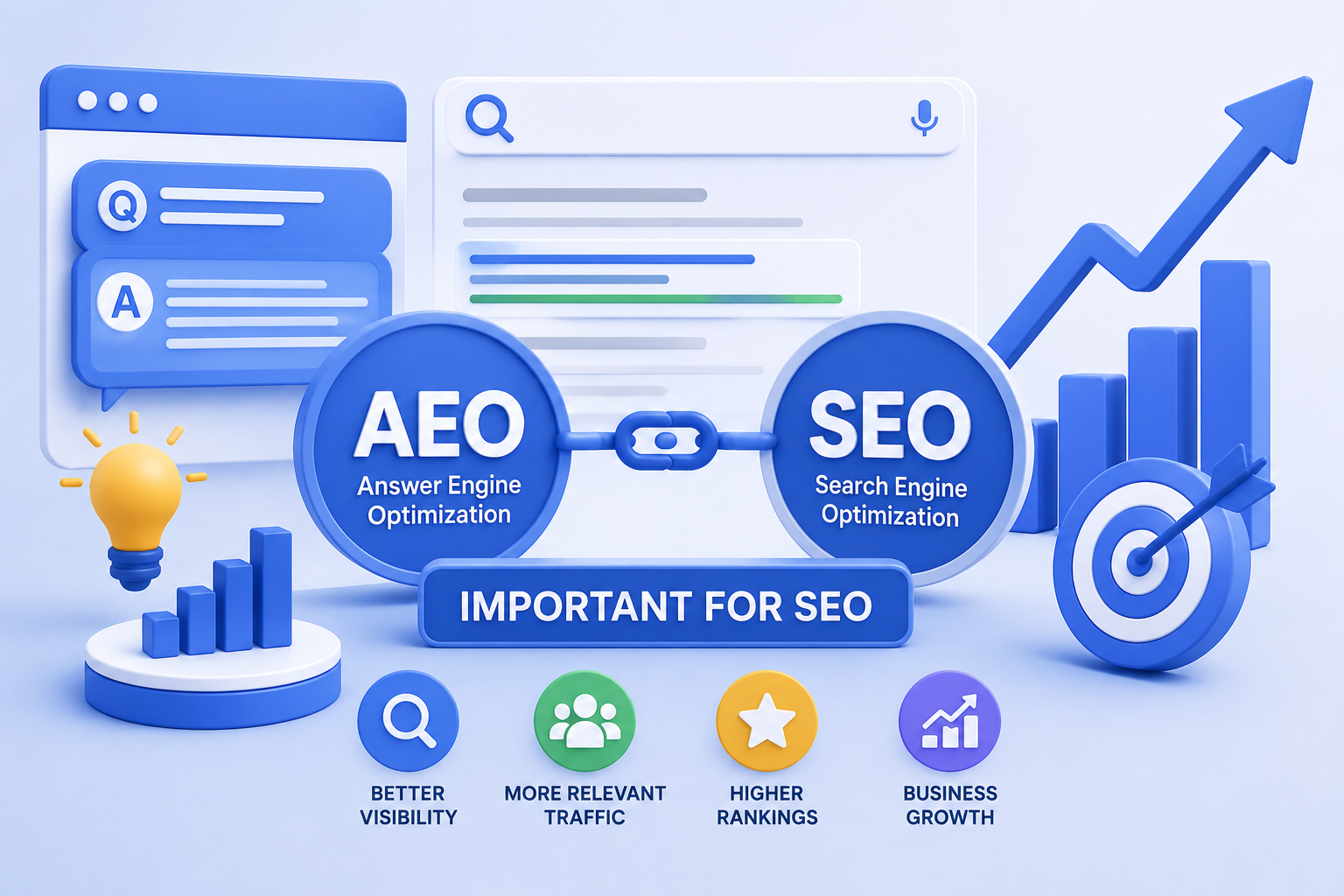
This shift has introduced Answer Engine Optimization (AEO), a strategy focused on helping AI systems understand, trust, and reference your content when generating responses. AEO is not a replacement for SEO; instead, it expands on traditional SEO practices. In 2026, businesses that combine strong SEO foundations with AEO strategies will be better positioned to maintain visibility in an AI-driven search landscape.
What AEO Is (And What It Is Not)
Answer Engine Optimization is the practice of structuring and enhancing your content so that AI-powered answer platforms select it as a cited source when generating responses to user queries. These platforms include ChatGPT, Google AI Overviews, Perplexity AI, Google Gemini, Microsoft Copilot, and voice assistants like Siri and Alexa.
The key distinction from traditional SEO is in the outcome. SEO earns you a position in a ranked list of links. AEO earns you a place inside the answer itself. When someone asks Perplexity, “What is the best accounting software for small businesses?” the platform does not show ten blue links. It synthesizes information from multiple sources, names specific products, and cites the content it trusts most. AEO is the work that makes your content the one being cited.
AEO is not a separate discipline that operates independently from SEO. It is a layer that sits on top of your SEO foundation. Without strong SEO (crawlable site, quality content, topical authority, technical health), AEO cannot function. But without AEO, even well-ranked content may be invisible in the AI-generated answers that an increasing share of users now rely on.
The simplest way to understand the relationship: SEO helps you get found. AEO helps you get used.
How AEO Works: The Mechanics Behind AI Answers
Understanding how AI answer platforms select sources helps you optimize for citation. The process follows three stages.
Retrieval
When a user submits a query, the AI system searches across its index or the live web for passages that are relevant to the question. Content with clear headings, direct answers in the opening lines, and strong topical alignment gets retrieved. Pages with vague titles, long introductions, or critical content hidden behind JavaScript often get skipped.
Trust Evaluation
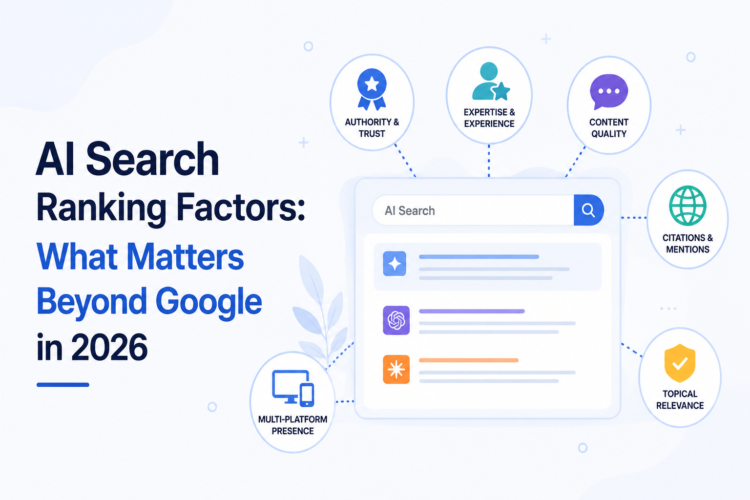
Retrieved passages are evaluated for credibility. AI systems assess author credentials, factual accuracy, content freshness, source authority, brand mentions across the web, and the presence of structured data. Content from websites with strong E-E-A-T signals (Experience, Expertise, Authoritativeness, Trustworthiness) is preferred over anonymous or unverified sources.
Extraction and Citation
The AI selects the most relevant, trustworthy passage and either cites it directly (as Perplexity and Google AI Overviews do) or incorporates the information into a synthesized answer (as ChatGPT does). The content that gets cited consistently shares specific traits: it is concise, factually precise, clearly structured, and self-contained enough to make sense when extracted from the broader page.
Why AEO Matters for Your SEO Strategy
AEO is not an optional add-on. It addresses structural changes in how people search and how platforms deliver information.
Zero-Click Search Is Growing
A significant and growing share of searches now end without a click to any external website. When Google AI Overviews appear, users often get their answers from the summary and move on. For businesses that depend on organic traffic from informational queries, this means traditional click-based strategies are losing ground. AEO ensures your brand remains visible even when users do not click through.
AI Traffic Converts at Higher Rates
Users who arrive at your website from AI-generated citations tend to be further along in their decision process. They have already received context and a recommendation from the AI. By the time they click, they are evaluating, not browsing. This makes AI-referred visitors more valuable per session than typical organic visitors.
Competitors Are Already Optimizing
A growing number of businesses are investing in AEO. Every month you delay, competitors gain citation share and build the trust signals that AI systems reward. Visibility in AI answers compounds over time, making early action disproportionately valuable.
AI Systems Are Becoming Primary Research Tools
Enterprise buyers, technology leaders, and consumers increasingly use AI tools to research, compare, and shortlist before ever visiting a company’s website. If your brand is absent from those AI-generated answers, you are excluded from the consideration set before any human conversation begins. An effective SEO strategy in 2026 must include AEO as a core component, not a peripheral experiment.
AEO vs. SEO: Where They Overlap and Where They Differ
AEO and SEO are complementary, not competing. Understanding where they share common ground and where they diverge helps businesses allocate resources effectively.
Shared foundations. Both require high-quality content, strong site architecture, technical soundness, topical authority, and credible backlinks. A website that performs well in traditional SEO has a better starting position for AEO than one without these foundations.
Different outcomes. SEO earns a ranking position in a list. AEO earns a citation inside an AI-generated answer. SEO drives clicks. AEO drives brand mentions, trust, and consideration, sometimes without any click at all.
Different content requirements. SEO content can be long-form, exploratory, and persuasive. AEO content must be structured for extraction: concise answers in the first 40 to 60 words of each section, self-contained paragraphs, and clear headings that match conversational queries. The best content serves both purposes simultaneously.
Different metrics. SEO success is measured through rankings, impressions, clicks, and organic traffic. AEO success is measured through AI citation frequency, brand mention rates across AI platforms, share of voice in AI responses, and branded search growth driven by AI exposure.
Different authority signals. SEO leans heavily on backlinks as a proxy for authority. AEO evaluates authority more broadly: brand mentions across third-party platforms, positive sentiment in reviews and community discussions, entity consistency across the web, and factual accuracy verified across multiple sources.
How to Implement AEO Within Your Existing SEO Strategy
You do not need to abandon your SEO strategy to adopt AEO. You need to extend it. Here is how.
1. Restructure top-performing content for AI extraction. Review your highest-ranking pages. Add direct answers in the first two sentences of each section. Ensure headings match the questions your audience asks. Make each section self-contained so it works as a standalone passage when extracted by an AI system.
2. Implement structured data across key pages. Add FAQ, Article, HowTo, Organization, and Product schema markup. Structured data helps AI systems understand the type, context, and authority of your content. It does not guarantee citation, but it significantly improves how AI platforms interpret your pages.
3. Ensure AI crawler access. Review your robots.txt file. Confirm that key AI crawlers (Google-Extended, OAI-SearchBot, PerplexityBot, ClaudeBot) are not blocked. If AI bots cannot access your content, they cannot cite it.
4. Build off-site brand authority. AI systems are significantly more likely to cite brands that are corroborated by independent third-party sources. Invest in earning mentions on industry publications, review platforms (G2, Clutch), community forums (Reddit, LinkedIn), and professional directories.
5. Maintain content freshness. Update your most important pages quarterly. Add current data, recent examples, and visible “last updated” timestamps. AI platforms strongly favor fresh content for time-sensitive queries.
6. Track AEO-specific metrics. Add AI visibility tracking to your measurement stack. Tools like Semrush Enterprise AIO, Ahrefs Brand Radar, and Otterly.ai monitor citation frequency, brand mentions, and share of voice across AI platforms.
An integrated digital marketing approach that combines these AEO actions with your existing SEO and content marketing efforts delivers the strongest, most durable results across both traditional and AI-driven search.
Common AEO Mistakes That Undermine Results
Treating AEO as separate from SEO. AEO builds on SEO, not beside it. Organizations that create separate AEO programs without integrating them into their existing search strategy create duplication, inconsistency, and wasted resources.
Ignoring off-site presence. Your website is only one source AI systems evaluate. If your brand has no presence on review platforms, community forums, or industry publications, you lack the corroboration AI engines need to cite you confidently.
Writing only for AI extraction. Content that is structured purely for machine extraction but lacks genuine insight, experience, or usefulness will not perform well with either humans or AI. The strongest AEO content is written for people first and structured for machines second.
Expecting instant results. Some quick wins (featured snippets, People Also Ask placements) can happen within weeks. Broad AI citation patterns typically take three to six months of consistent effort. AEO compounds over time, just like traditional SEO.
Conclusion
AEO is not a buzzword or a rebranding of SEO. It addresses a real structural change in how people find information and how platforms deliver answers. AI-powered search is growing. Zero-click behavior is increasing. And the brands that earn citations in AI-generated answers gain trust, awareness, and consideration that traditional rankings alone cannot provide.
The path forward is not choosing between SEO and AEO. It is building an integrated strategy where SEO provides the foundation (discoverability, technical health, topical authority) and AEO adds the layer that makes your content citation-ready for AI systems. At Digitalverse, we believe the businesses that build both layers now will hold a compounding advantage as AI-powered discovery continues to reshape how their audience searches, evaluates, and decides.
FAQs
Q1: What does AEO stand for in digital marketing?
AEO stands for Answer Engine Optimization. It is the practice of optimizing content so that AI-powered platforms like ChatGPT, Perplexity, Google AI Overviews, and voice assistants can understand, trust, and cite it when generating answers to user queries.
Q2: Is AEO replacing SEO?
No. AEO is not replacing SEO. It is extending it. SEO remains essential for crawlability, indexation, rankings, and organic traffic. AEO adds a layer of optimization that ensures your content is also selected and cited in AI-generated answers. The strongest strategies combine both.
Q3: How does AEO affect content strategy?
AEO requires content to be structured for extraction: direct answers in the first few sentences, clear question-aligned headings, self-contained sections, and factual density. This does not conflict with traditional SEO content strategy. In fact, content structured for AEO typically performs better in traditional search as well, particularly for featured snippets and People Also Ask placements.
Q4: What tools can track AEO performance?
Several platforms now offer AEO-specific tracking. Semrush Enterprise AIO, Ahrefs Brand Radar, Otterly.ai, and HubSpot’s AI Search Grader can monitor brand mentions, citation frequency, and share of voice across AI platforms. These tools work alongside traditional analytics like GA4 to provide a complete visibility picture.
Q5: Can small businesses benefit from AEO?
Yes. AI systems do not exclusively favor large brands. They favor content that is authoritative, factually precise, and clearly structured within a specific topic area. A smaller business that publishes consistently within a focused niche and maintains strong off-site presence can outperform much larger competitors in AI-generated answers. A targeted SEO and content strategy is the most effective path regardless of company size.
Q6: How does AEO relate to GEO (Generative Engine Optimization)?
AEO is a component of the broader discipline known as GEO. While GEO encompasses all strategies for optimizing brand presence across generative AI platforms (including training data influence and cross-platform authority building), AEO focuses specifically on the answer-retrieval layer: ensuring your content is the one that gets selected when an AI engine needs a source for a specific fact, definition, or recommendation.