Introduction
Search is changing quickly in 2026. For years, businesses focused on ranking web pages on traditional search engines such as Google and Bing. That work still matters, but people are increasingly asking questions through AI-powered experiences that can generate direct answers instead of presenting only a list of links.
This shift has created a new discipline: Generative Engine Optimization, or GEO. GEO focuses on improving the likelihood that a business, product, service, or piece of content is understood, trusted, and referenced by AI-powered search and answer engines.
The important point is that GEO does not replace SEO. SEO remains the foundation for making a website crawlable, technically sound, relevant, authoritative, and discoverable. GEO builds on many of those same principles while adding a stronger focus on entities, answer quality, context, credibility, structured information, and how content can be interpreted and cited by generative systems.
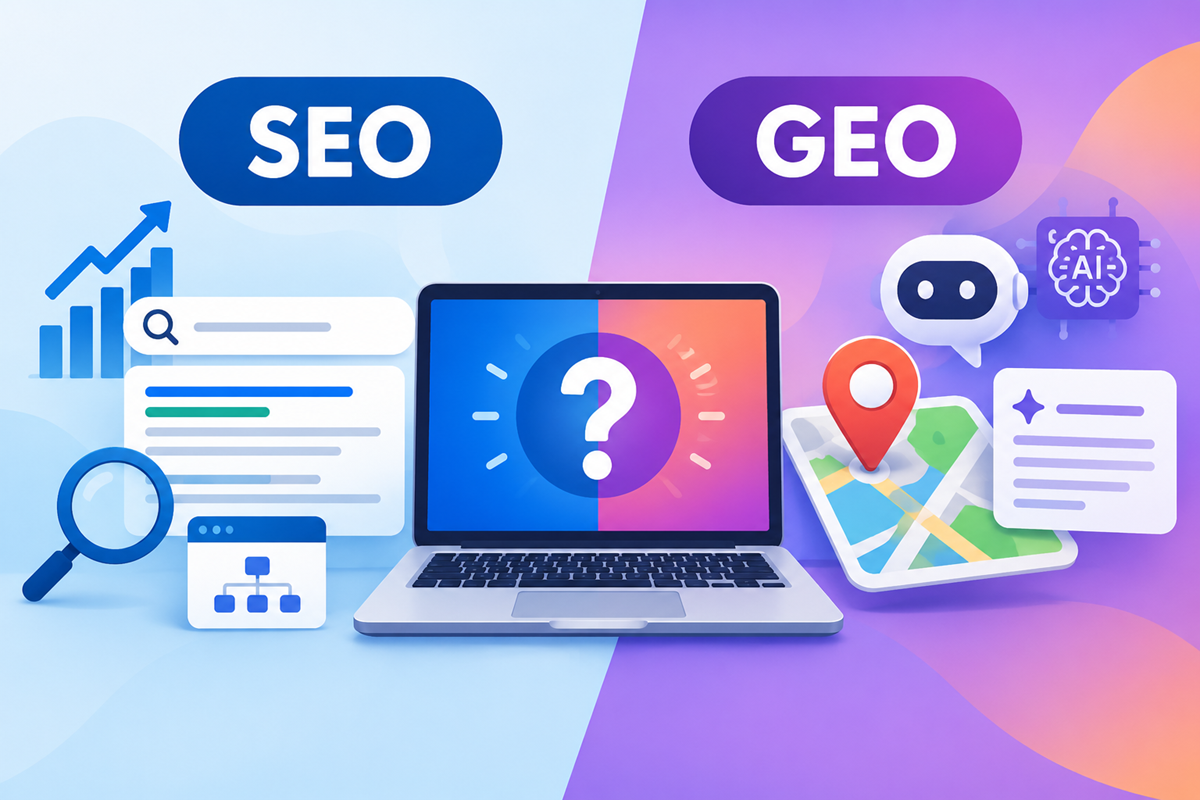
For businesses in 2026, the smarter approach is not GEO vs SEO. It is GEO and SEO working together.
What Is SEO?
Search Engine Optimization (SEO) is the process of improving a website and its content so that search engines can discover, understand, and rank it for relevant queries.
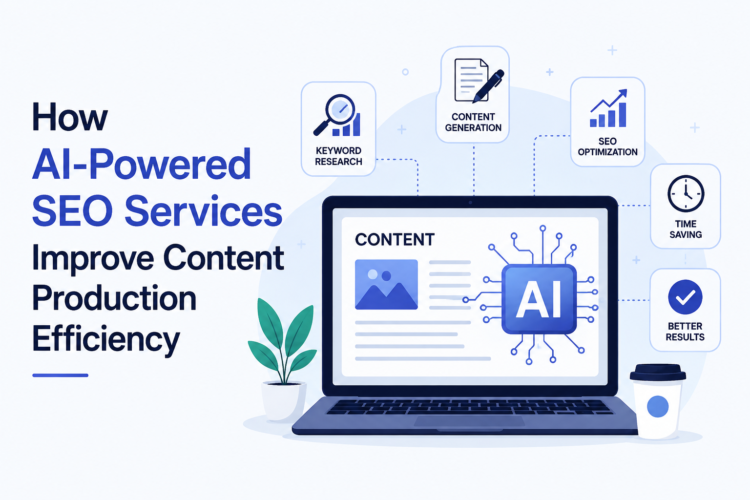
A modern SEO strategy typically covers technical SEO, keyword research, content optimization, internal linking, site architecture, backlinks and digital authority, page experience, local SEO where relevant, and ongoing performance analysis.
The goal is to earn organic visibility when a user searches for something related to a business. For example, a company selling accounting software may optimize for searches such as “best accounting software for small businesses” or “cloud accounting software.”
SEO remains highly valuable because search engines still drive discovery, comparison, research, and purchase decisions. Strong SEO also gives AI systems useful source material to understand a business.
What Is GEO?
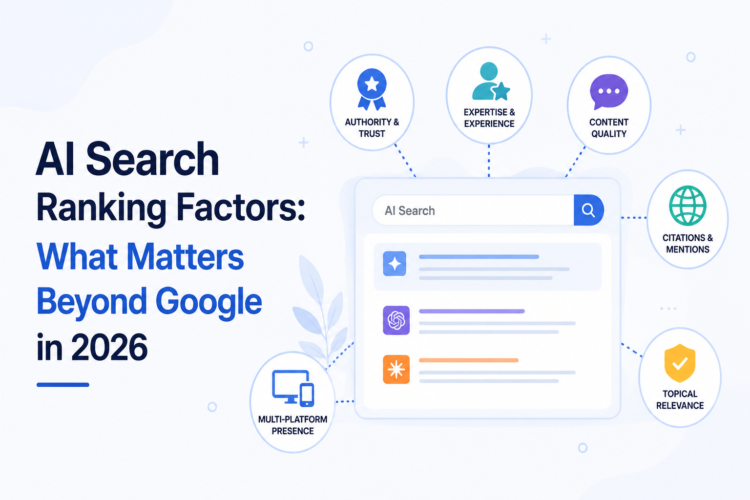
Generative Engine Optimization (GEO) is the practice of optimizing a brand’s online presence and content for visibility within AI-generated answers and generative search experiences.
Instead of focusing only on where a page ranks in a traditional results page, GEO considers whether an AI system can identify a business as a relevant and credible source when answering a user’s question.
GEO can involve creating clear, comprehensive, factually supported content; strengthening brand and entity signals; using structured data; answering conversational questions directly; maintaining consistent information across important online sources; and building authority around specific topics.
For example, a user may ask an AI assistant, “What are the best SEO agencies for SaaS companies?” A GEO-oriented strategy aims to make the business easier for AI systems to understand and potentially include when forming an answer.
Because AI answers can synthesize information from multiple sources, businesses need to think beyond individual keyword rankings and consider their overall digital footprint.
GEO vs SEO: Key Differences
SEO and GEO share a common objective: helping the right audience discover a business. However, they optimize for different search environments and visibility signals.
SEO primarily targets traditional search results. Its success is commonly evaluated through rankings, organic traffic, impressions, clicks, conversions, and other website performance metrics.
GEO focuses more heavily on visibility within generative answers. It considers whether content is easy for AI systems to interpret, whether a brand has strong topical and entity relevance, whether claims are supported by credible sources, and whether the business is represented consistently across the web.
Another difference is the nature of the search journey. Traditional SEO often targets keyword phrases and search-result pages. GEO needs to account for conversational, multi-part questions where an AI system may summarize information from several sources.
This does not mean GEO has a completely separate rulebook. Technical accessibility, quality content, authority, structured data, and strong website architecture can support both disciplines. The difference is mainly in how businesses optimize and measure visibility in each environment.
Why Businesses Need Both SEO and GEO in 2026
Businesses should use both because customers are no longer relying on one search behavior.
Some people still search Google using short phrases, compare several pages, visit websites, and make decisions from conventional search results. Others ask AI tools long-form questions and expect a summarized recommendation.
If a business invests only in SEO, it may miss opportunities in generative search. If it focuses only on GEO while neglecting technical SEO and traditional organic visibility, it can weaken the foundation that helps both users and search systems understand its website.
A combined strategy creates several advantages:
1. Broader search visibility: SEO supports traditional organic discovery while GEO targets AI-powered answer experiences.
2. Stronger content: Content designed to answer real questions clearly can serve both users and search systems.
3. Better brand authority: Consistent information, expert content, reviews, references, and credible mentions can strengthen trust signals.
4. Future readiness: Search behavior is evolving, so businesses benefit from optimizing across multiple discovery channels.
5. More useful measurement: Teams can monitor both traditional search performance and emerging AI visibility rather than relying on rankings alone.
How SEO and GEO Work Together
The best approach is to build one integrated search strategy rather than running SEO and GEO as completely separate campaigns.
Start with technical SEO. Make sure important pages can be crawled, indexed, rendered, and understood. Improve site structure, page speed, internal linking, metadata, canonicalization, and structured data where appropriate.
Next, develop topic-focused content. Instead of producing thin pages for individual keywords, create useful resources that cover a subject from multiple angles. Use descriptive headings, concise answers, examples, definitions, comparisons, and supporting evidence.
Then strengthen entity and brand signals. Clearly explain who the company is, what it offers, who it serves, where it operates, and what makes its expertise credible. Keep business information consistent across major profiles and authoritative third-party sources.
Finally, monitor both traditional and generative visibility. SEO reporting can include rankings, impressions, clicks, organic conversions, and indexed pages. GEO reporting can include brand mentions in relevant AI answers, cited or referenced content, visibility for important conversational prompts, and changes in how AI systems describe the business.
This integrated approach makes GEO an extension of a strong search strategy rather than a replacement for SEO.
How to Build a GEO + SEO Strategy
A practical 2026 strategy can follow these steps:
- Identify important customer questions. Go beyond keyword volume and collect the questions customers ask before choosing a product or service.
- Map topics to search intent. Separate informational, commercial, comparison, transactional, and navigational needs.
- Audit existing content. Find pages that are outdated, thin, repetitive, poorly structured, or missing clear answers.
- Improve factual clarity. Use accurate claims, explain concepts directly, cite trustworthy evidence where useful, and show expertise.
- Strengthen topical authority. Build connected content around core subjects instead of publishing isolated articles.
- Improve technical foundations. Fix indexing, crawlability, site architecture, page experience, internal links, and structured data issues.
- Build brand authority. Earn relevant mentions, reviews, expert contributions, partnerships, and authoritative references.
- Optimize for conversational queries. Create content that naturally addresses questions people may ask AI assistants.
- Measure both channels. Track traditional SEO metrics alongside AI-search visibility and brand representation.
- Refresh continuously. AI search and traditional search are both evolving, so content and technical strategies need regular review.
Businesses that do not have internal expertise can consider professional GEO services for AI search alongside conventional SEO support. The right provider should be able to explain the strategy, measurement framework, technical work, content process, and expected business outcomes rather than simply promising AI rankings.
What Should Businesses Look for in an SEO and GEO Partner?
When evaluating a best SEO company or a digital marketing partner for 2026, businesses should look beyond promises of rankings.
Look for experience with technical SEO, content strategy, digital PR or authority building, analytics, structured data, and modern search behavior. A strong partner should also understand how AI-generated search changes content discovery and brand visibility.
Ask how the agency measures success. For SEO, useful metrics may include organic traffic, qualified leads, conversions, impressions, rankings, and revenue contribution. For GEO, ask how they monitor relevant prompts, brand mentions, citations, source inclusion, and the accuracy of AI-generated descriptions.
It is also important to avoid agencies that guarantee placement in AI answers. Generative systems can change their sources, responses, models, and retrieval behavior. A credible agency should focus on improving the underlying signals and content that increase the probability of visibility, not promise outcomes it cannot control.
The Future of Search Is Hybrid
The rise of AI search does not make SEO obsolete. Instead, it expands what search visibility means.
SEO provides the technical, content, authority, and discoverability foundation. GEO adapts that foundation for a world where users increasingly receive synthesized answers from AI systems.
Businesses that combine both can create a stronger digital presence across traditional search results and generative experiences. The strategy should be audience-first: understand what people want to know, provide accurate and useful answers, demonstrate genuine expertise, and make the business easy for search systems to understand.
In 2026, the question is no longer simply, “How do we rank?” A better question is, “How do we become the trusted answer wherever our customers search?” That mindset is what makes SEO and GEO most powerful together.
FAQs
1. Is GEO replacing SEO in 2026?
No. GEO is not a replacement for SEO. SEO remains important for traditional organic search, while GEO focuses on visibility in AI-generated search and answer experiences. Many of the fundamentals, including quality content, technical accessibility, authority, and clear information, support both.
2. What is the main difference between GEO and SEO?
SEO primarily focuses on improving visibility and rankings in traditional search engines. GEO focuses on making a brand and its content easier for generative AI systems to understand, trust, summarize, and potentially reference in AI-generated answers.
3. Do small businesses need GEO?
Yes, especially if their customers are starting to use AI tools to research products and services. Small businesses can begin with practical steps such as creating authoritative content, answering customer questions, maintaining accurate business information, and strengthening relevant brand mentions.
4. How does GEO help with AI search?
GEO helps organize and strengthen a business’s information so AI-powered search systems can better understand its expertise, offerings, entities, and relevance to user questions. It can include content optimization, structured information, topical authority, and consistent brand signals.
5. Can SEO help GEO performance?
Yes. Strong SEO can improve the accessibility, structure, relevance, and authority of a website. These qualities can also make information easier for AI systems and users to discover and understand.
6. What are GEO services for AI search?
GEO services for AI search typically include AI-search visibility audits, conversational query research, content optimization, entity and brand strengthening, structured data improvements, authority building, and monitoring of brand visibility in generative answers.
7. How should GEO success be measured?
GEO should be measured using a mix of visibility and business signals. Depending on the strategy, this may include brand mentions in relevant AI answers, citation or source inclusion, visibility for priority prompts, referral traffic where identifiable, branded search growth, qualified leads, and conversions.