
Content is at the heart of every successful SEO strategy. But producing high-quality, search-optimized content consistently can be time-consuming. From keyword research and competitor analysis to content briefs, writing, optimization, publishing, and performance tracking, traditional content production involves many repetitive tasks.
This is where AI-powered SEO services are changing the way businesses approach content marketing. By combining artificial intelligence with SEO expertise, businesses can streamline repetitive processes, identify content opportunities faster, and produce optimized content at scale.
AI does not replace SEO professionals or content writers. Instead, it acts as a powerful productivity layer that helps teams spend less time on manual tasks and more time on strategy, creativity, quality, and audience engagement.
What Are AI-Powered SEO Services?
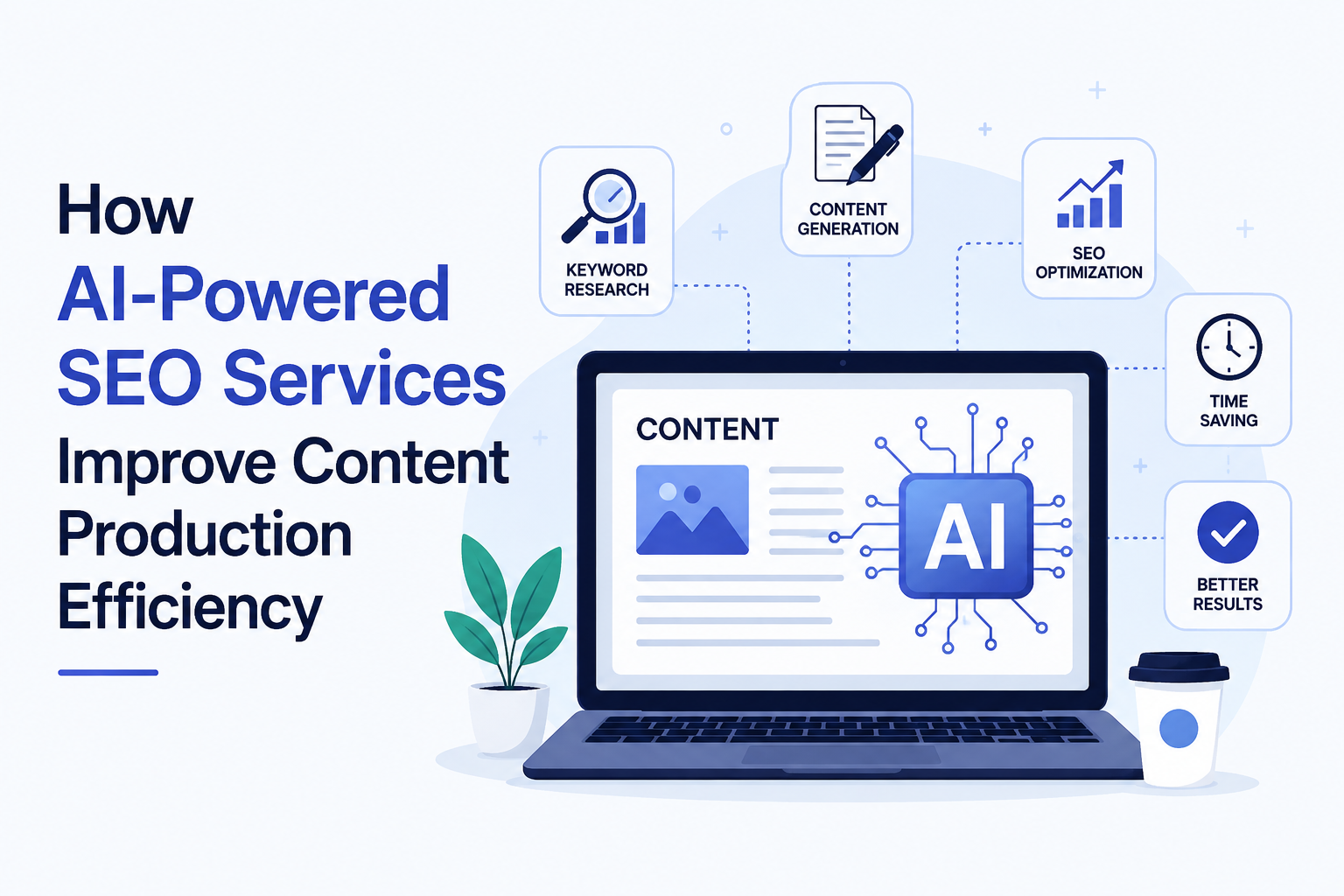
AI-powered SEO services use artificial intelligence, machine learning, automation, and SEO data to improve different stages of the search optimization process.
These services can support tasks such as:
- Keyword research and clustering
- Search intent analysis
- Competitor content analysis
- Content brief generation
- Topic discovery
- Content outlining
- On-page optimization
- Internal linking recommendations
- Content refreshing
- Performance analysis
- SEO reporting
Modern SEO automation is increasingly becoming a structured workflow covering research, briefing, drafting, optimization, publishing, and ongoing maintenance rather than simply using AI to write articles.
How AI Improves Content Production Efficiency
1. Faster Keyword Research and Topic Discovery
Keyword research is one of the first steps in content production, but manually analyzing hundreds or thousands of keywords can take considerable time.
AI-powered SEO tools can analyze search terms, related queries, search intent, competitor content, and semantic relationships to identify valuable opportunities.
Instead of spending hours sorting through keyword lists, SEO teams can quickly identify:
- High-value primary keywords
- Long-tail search queries
- Related topics
- Question-based searches
- Content gaps
- Search intent patterns
This allows content teams to move from research to content planning much faster.
2. Automated Content Brief Creation
A strong content brief gives writers a clear direction before they begin writing. However, creating detailed briefs manually for every article can become a bottleneck.
AI can analyze existing search results and competitor pages to help create structured briefs containing suggested headings, related topics, questions, keywords, and content requirements.
Writers can then start with a clearer understanding of what the content needs to cover instead of spending additional hours researching the structure themselves.
3. Faster First-Draft Creation
One of the most noticeable advantages of AI in content production is faster drafting.
AI can help create initial outlines, introductions, explanations, FAQs, and other sections based on an approved content strategy. This gives writers a starting point and reduces the amount of time spent staring at a blank page.
However, businesses should not treat AI-generated drafts as finished content. Human review remains essential for accuracy, originality, brand voice, examples, expertise, and overall usefulness.
The most effective approach is generally AI-assisted content production rather than completely automated publishing. Research into SEO automation similarly emphasizes automating repetitive tasks while retaining human judgment for strategy, quality, and brand expertise.
4. More Efficient On-Page Optimization
After writing an article, SEO teams need to optimize elements such as headings, title tags, meta descriptions, keyword usage, internal links, and content structure.
AI-powered SEO workflows can identify potential optimization opportunities quickly.
For example, AI can help SEO professionals find:
- Missing topic coverage
- Overused or underused terms
- Internal linking opportunities
- Relevant subtopics
- Weak content sections
- Optimization opportunities for existing pages
This reduces repetitive manual checks and allows SEO specialists to focus more on strategic improvements.
5. Easier Content Refreshing
Creating new content is only one part of content marketing. Existing pages also need regular updates as search trends, products, statistics, and user expectations change.
AI can help identify pages that may need attention by analyzing performance and content freshness.
SEO teams can use AI-assisted workflows to review older articles, identify outdated sections, suggest additional topics, and create update recommendations.
This makes content maintenance more manageable, especially for websites with hundreds or thousands of pages.
AI-Powered SEO and the Rise of AI Search
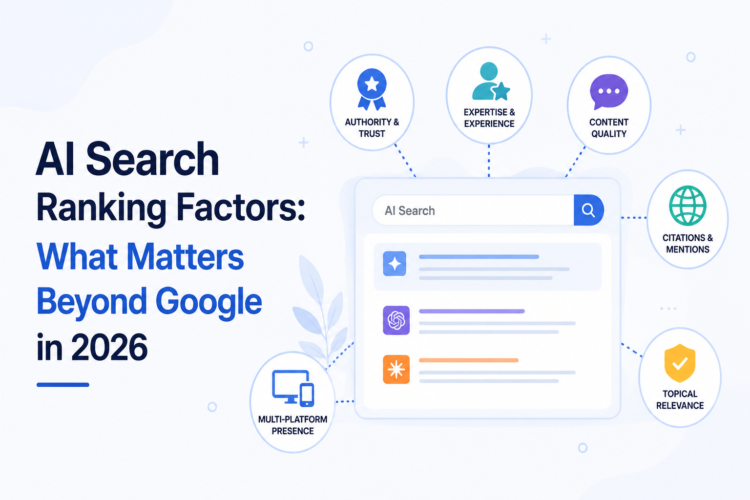
Search behavior is also changing. Users increasingly interact with AI-powered search experiences and platforms that provide summarized answers rather than simply displaying traditional search results.
As a result, businesses are beginning to think beyond conventional SEO and consider Generative Engine Optimization (GEO).
Digital Verse Technologies offers both SEO and Generative Engine Optimization as part of its digital marketing services, reflecting the growing need to optimize content for changing search experiences.
For AI-driven search, content needs to be useful, clear, well-structured, trustworthy, and easy for systems to interpret. Research into generative search also points toward the importance of machine-readable content, clear claims, supporting evidence, and authoritative sources.
This means AI-powered SEO services can help businesses build a more efficient content workflow while preparing their content strategy for evolving search environments.
Why Human Expertise Still Matters
AI can significantly improve speed, but speed alone does not guarantee effective content.
Poorly supervised AI content can contain factual errors, generic explanations, repetitive information, or content that does not reflect a brand’s actual expertise.
A better workflow combines:
AI + SEO data + human expertise + editorial review
AI can handle repetitive research and production tasks, while SEO professionals determine the strategy and writers ensure the content is accurate, useful, original, and aligned with the brand.
This balance is particularly important because simply publishing more AI-generated content does not automatically result in better rankings or greater visibility.
How Businesses Can Use AI-Powered SEO Services
A practical AI-assisted content workflow can look like this:
Step 1: Research
Identify keywords, competitors, search intent, and content opportunities.
Step 2: Planning
Create topic clusters and detailed content briefs.
Step 3: Drafting
Use AI to accelerate initial content development.
Step 4: Human Review
Check facts, originality, expertise, tone, and relevance.
Step 5: SEO Optimization
Optimize headings, metadata, internal links, structure, and topical coverage.
Step 6: Publishing and Monitoring
Publish the content and monitor rankings, traffic, engagement, and conversions.
Step 7: Continuous Improvement
Refresh content based on new data, changing search behavior, and performance.
This workflow allows businesses to increase production efficiency without sacrificing the human input required for high-quality content.
Conclusion
AI-powered SEO services are making content production faster, more organized, and more scalable. From keyword research and content briefs to optimization and content refreshing, AI can reduce repetitive workloads throughout the SEO process.
However, the real advantage does not come from replacing people with AI. It comes from using AI to support skilled SEO professionals and content teams.
For businesses, the goal should be simple: produce better content, work more efficiently, and continuously improve based on real search and audience data.
With the right combination of AI, SEO expertise, and human creativity, businesses can build a content production process that is prepared not only for traditional search engines but also for the rapidly evolving world of AI-powered search.
FAQs
1. Can AI completely replace SEO content writers?
No. AI can assist with research, outlining, drafting, and optimization, but human expertise is still important for accuracy, originality, brand voice, strategic decisions, and editorial quality.
2. How do AI-powered SEO services save time?
They automate repetitive tasks such as keyword clustering, competitor analysis, content briefs, optimization recommendations, reporting, and content refresh suggestions. This allows SEO teams to dedicate more time to strategic work.
3. Is AI-generated content good for SEO?
AI-generated content can support SEO when it is useful, accurate, original, and properly reviewed. The focus should be on creating valuable content for users rather than simply producing a large volume of AI-written pages.
4. Can AI-powered SEO help with AI search visibility?
Yes. AI-assisted SEO can help businesses create well-structured, relevant, and authoritative content that is easier for modern search systems to understand. However, visibility in AI-generated search results cannot be guaranteed.
5. Why choose professional AI-powered SEO services?
Professional SEO services combine AI tools with human strategy, technical SEO knowledge, content expertise, and performance analysis. This creates a more controlled workflow than relying on AI tools alone and helps businesses scale content production while maintaining quality.